Long-Form Storytelling Structure
He doesn't write songs. He writes the whole damn story and lets you sit in it.

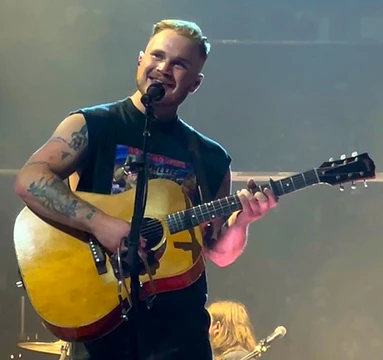
Long-Form Storytelling Structure refers to Zach Bryan's signature approach to song architecture, in which tracks stretch well beyond the two-to-three-minute radio norm and unfold like short stories or short films. Rather than cycling a hook, Bryan builds scenes, introduces characters, lets tension accumulate across verses, and often arrives at an emotional turn only in the final minute. The result is a listening experience that feels closer to reading a well-crafted narrative than to hearing a pop arrangement. This structural choice is not merely a length preference; it is the engine of his identity as an artist. By giving himself the time to breathe, to repeat a phrase with a new inflection, to let a guitar line sit in silence before the next thought arrives, Bryan creates a sense of intimacy and consequence that shorter formats struggle to achieve. Fans frequently describe his songs as 'stories you can't skip through,' and that inability to fast-forward is precisely the point.
- Artist
- Zach Bryan
- Genre space
- Indie country / folk / Americana
- Hometown
- Burley, Oklahoma
- Typical track length
- Often 5–8+ minutes, well above radio standard
- Core narrative mode
- First-person confessional, cinematic scene-building
- Rise to prominence
- Social-media-driven, pre-label, circa 2019–2020
Lore & Background
Bryan's long-form structure is rooted in the oral-tradition storytelling of the American South and Southwest, where a tale is told from beginning to end, with no commercial break, no skip button, no second verse that merely repeats the first. In his tracks, a single image—a pair of headlights in the dark, a particular shade of orange in a field, the creak of a porch board—can be introduced in verse one and then haunted, recontextualized, and finally released over the course of six or seven minutes. The listener is asked to stay, to let the scene develop, to feel the weight of a line that might have been disposable in a shorter song but becomes devastating when it arrives in the fifth minute, after four minutes of building. This approach also shapes his vocal performance. Because the structure is narrative rather than hook-driven, Bryan's voice is allowed to crack, to drop to a near-whisper, to push into a raw belt and then pull back. The long form gives him room to be a person talking rather than a singer performing. The imperfections—the swallowed syllable, the breath before a line, the slight stumble on a word—become part of the storytelling, evidence that a real human is recounting something that actually happened to them. In the broader landscape of country and folk music, Bryan's commitment to length and narrative arc sets him apart from the compressed, chorus-first structures that dominate streaming playlists. His songs reward patience. They ask the listener to be a witness, not a consumer, and that ask has become central to why his audience feels a personal, almost confessional bond with the material.
In Their Own Story
The truck idles in the gravel lot outside the bar, engine ticking in the cold. He doesn't go in. He sits there with the guitar case on the passenger seat and the radio off, just listening to the silence of the Oklahoma night. He's been driving for two hours, thinking about the last thing she said, the way she said it, the way the kitchen light caught the edge of the counter. He's going to write it down tonight. All of it. Not the chorus first. Not the hook. The whole thing, from the first morning they met to the last night the porch light was still on. He'll take his time. The song will be as long as it needs to be. And when he's done, he'll drive home with the windows down and the November air cutting through the cabin, and the story will be finished, and he'll be lighter, and the truck will still be ticking in the lot, and the night will still be wide and empty and his.
Reader's Guide
Think of Long-Form Storytelling Structure as Bryan's primary 'power'—the one that makes every other element in his catalog land with more force. It is the architectural choice to give a song the length of a short story, often pushing past five or six minutes, so that narrative beats can unfold in real time rather than being compressed into a verse-chorus loop. Across tracks like 'Headlights,' 'I Remember Everything,' 'Something in the Orange,' and 'Build Me a Cabin,' you can trace the same skeleton: an establishing scene with a concrete sensory detail, a slow accumulation of memory or tension, a mid-song shift in perspective or emotional register, and a closing that resolves not with a shouted hook but with a quiet, almost whispered turn. The structure is the power because it changes the listener's contract: you are not hearing a song, you are being told a story, and you are expected to stay. This is central to Bryan's identity because it positions him as a storyteller first and a performer second. The rawness of his vocal delivery, the deliberate pacing, the way a repeated line gains new meaning the third time it appears—all of it depends on the long form. Strip the length away and the songs become fragments; keep it and they become experiences. Fans connect to this power because it mirrors how people actually talk about the things that matter. You don't summarize a relationship in ninety seconds. You tell it from the beginning, you get tangled in the middle, and you end somewhere you didn't expect. Bryan's songs feel like that conversation, stretched out, honest, and unedited, and that is why listeners describe them as 'listening to a person' rather than 'listening to a track.'
Did You Know?
- Bryan's songs frequently run well past the five-minute mark, a deliberate departure from the two-to-three-minute structure that dominates country radio and streaming playlists.
- His narrative approach draws on the oral-tradition storytelling of the American South, where a tale is told in full, with no interruptions, and the listener's role is to stay and listen.
- The long-form structure is what allows his vocal imperfections—cracks, whispers, mid-line breaths—to function as storytelling devices rather than production flaws to be edited out.
- Fans often describe his songs as 'stories you can't skip through,' and that inability to fast-forward is widely regarded as a core reason the material feels personally confessional rather than performative.
More in Themes & Signature Sounds
Elsewhere in the Zach Bryan universe
Spotted an error? Know more?
This is a living reference — every entry is fact-audited, and reader corrections feed straight into our audit queue. Suggest an edit · See this site's audit record