Heartbreak and Loss
Every chord is a door he can't close; every verse, a room he still lives in.

Heartbreak and loss is the gravitational center of Zach Bryan's songwriting. From his breakout viral tracks to his later studio work, the artist returns again and again to the ache of a relationship ending, the quiet grief of watching a small-town life slip away, and the way memory keeps rewriting the past. It is not a single song or a single album; it is the emotional architecture that holds his entire catalog together. In a landscape of polished country production and pop-country hooks, Bryan's treatment of loss stands apart for its rawness. He writes the way someone talks at 2 a.m. on a back porch—halting, self-contradictory, honest. The theme gives his music its weight and its audience: listeners who recognize their own unfinished sentences in his verses.
- Artist origin
- Burgin, Oklahoma (rural panhandle)
- Primary instrument
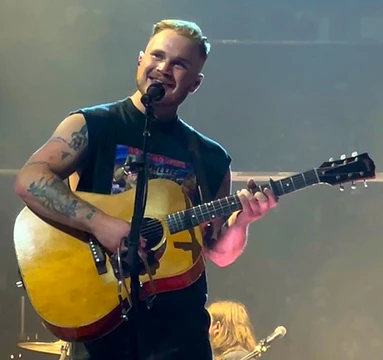
- Acoustic guitar (often a single, well-worn dreadnought)
- Breakout period
- 2020–2021, via viral YouTube and social-media clips
- Dominant genre blend
- Folk, Americana, and raw country-adjacent songwriting
- Recurring lyrical subject
- Ended relationships, small-town nostalgia, personal grief
- Performance style
- Minimalist live sets, often solo with guitar, emotionally unguarded
Lore & Background
Bryan's heartbreak songs rarely announce themselves with a title like 'My Ex.' Instead, the loss is embedded in the setting: a kitchen table where someone used to sit, a highway that still leads to a town that no longer feels like home, a phone number saved and never dialed. The Oklahoma and Texas landscapes in his work are not backdrop; they are the wound itself, wide-open and sun-bleached, making the absence of a person feel as vast as the terrain. What distinguishes his treatment from more conventional country heartbreak is the temporal confusion. He often writes in a present tense that is actually a past tense, as if the relationship never ended and the narrator is still waiting in the driveway. This creates a persistent, low-grade anxiety in the listener—the feeling that the door might open at any moment, and the narrator is not sure he'd want it to. The loss also extends beyond romance. There is a recurring thread of mourning a version of himself, a childhood, a community that is slowly being paved over or priced out. The grief is cumulative, layered, and never fully resolved, which is why his catalog feels like a long, slow exhale rather than a series of discrete stories.
In Their Own Story
The truck is parked where it's been parked every Thursday for three years, the engine ticking in the October cold. He doesn't go inside. He sits on the tailgate, guitar across his knees, and plays the same four bars over and over—not a song, just a shape, a question mark in a minor key. The cornfield behind the farmhouse is stubble now, brown and silent. A neighbor's dog crosses the yard, pauses, looks at him with an almost human curiosity, and keeps walking. He finishes the four bars. Starts them again. The sky is doing that thing where it's not quite dark yet but the light has already decided to leave, and the whole world looks like a photograph no one took on purpose. He plays until the cold gets into his knuckles, and then he doesn't play, but he doesn't go inside either. Not yet.
Reader's Guide
Think of heartbreak and loss as the foundational power in Bryan's sonic toolkit. It is not one trick; it is the lens through which every other element—melody, rhythm, vocal delivery—gets its charge. The way it shows up is structural: verses that circle a memory without resolving it, choruses that repeat a single image (a color, a room, a season) until it becomes a scar, and bridges that drop the vocal to a near-whisper as if the narrator is confessing to an empty room. Across his catalog, the theme mutates. In earlier, more stripped-down tracks it reads as immediate, almost reactive—the fresh cut. In later material it becomes archaeological, digging through years of sediment to find the same bone. The consistency is the point: the audience learns to trust that the pain is real, not performed, and that returns a kind of loyalty no production polish can buy. Fans connect because Bryan writes the loss they can't articulate. He doesn't resolve it. He doesn't offer a lesson or a redemption arc. He just sits in the feeling long enough for the listener to feel seen. That refusal to tidy up the grief is, paradoxically, the most healing thing about it. It is the power that makes the rest of the sound—the twang, the open-string resonance, the slightly rough vocal—feel necessary rather than decorative.
Did You Know?
- Bryan's early viral tracks were recorded in extremely minimal settings—often a single guitar, a phone or basic mic, and very little post-production—giving them a lo-fi intimacy that became part of his signature identity.
- He has spoken in interviews about growing up in a very small Oklahoma town, and that sense of geographic and social isolation is a recurring emotional texture in his songwriting.
- His live performances are known for emotional intensity; he has been documented breaking down mid-song, and the audience typically responds with a hush rather than applause, creating a communal, almost ritualistic atmosp
- The 'sad boy' folk/country wave that Bryan helped define in the early 2020s drew comparisons to earlier raw storytellers, but his specific blend of plains-folk imagery and unstructured vocal delivery set him apart from b
Creative Vision & Thematic Scope
American Heartbreak stands as Zach Bryan's major-label debut and third studio album, arriving on May 20, 2022, through Belting Bronco and Warner Records. Structured as a triple album, it represents a sweeping personal chronicle that Bryan described as exploring the past five years of his life. He framed the project as an attempt to articulate what it feels like to be a twenty-six-year-old man in America, weaving together themes of love, loss, rivalry, resentment, and forgiveness into a single cohesive work. The album's sonic palette is remarkably wide-ranging. As The Tennessean observed, the record moves fluidly between intimate, demo-like reflections and full-blown heartland rock anthems, all underpinned by a sense of untamed restlessness and what the publication called blurry-eyed angst. This tonal breadth gives the triple-album format a narrative arc, allowing Bryan to shift between vulnerability and raw energy across its thirty-four tracks.
Commercial Breakthrough & Chart Milestones
The commercial reception of American Heartbreak confirmed Bryan's arrival as a major force in contemporary country and folk music. The album debuted at number five on the US Billboard 200, pulling in 71,500 album-equivalent units in its first week, of which 6,000 were pure album sales. That opening week set it apart as the biggest first-week performance for a country album in 2022. On release day alone, the record claimed the top spot for most streams of any country album that year on both Spotify and Apple Music. By October 2022, cumulative U.S. sales had climbed to 702,000 album units. The album's momentum was further amplified by its preceding singles campaign, which included six releases. Among them, "Something in the Orange" became a crossover hit, peaking at number ten on the US Billboard Hot 100, demonstrating the record's ability to resonate well beyond traditional country audiences.
Musical Craft & Collaborative Depth
The personnel credits for American Heartbreak reveal a richly layered production built around Bryan's own multi-instrumental versatility. Across the thirty-four tracks, he handles lead vocals on every song and plays acoustic guitar on the majority, while also contributing electric guitar, slide guitar, harmonica, and bass drum on select cuts. The supporting roster spans a wide array of traditional and modern instruments. Read Connolly adds banjo, lap steel, pedal steel, and slide guitar; Billy Contreras and Lucas Ruge-Jones bring fiddle to numerous tracks; and Seth Taylor contributes acoustic and electric guitar, mandolin, and banjo. The ensemble also incorporates Juno and Moog synths, upright and electric bass, baritone horn, mellophone, and piano. Notably, all tracks were written by Bryan with the sole exception of "You Are My Sunshine," a classic penned by Jimmie Davis and Charles Mitchell. This blend of folk instrumentation with occasional electronic and brass textures gives the album its distinctive sonic identity.
Singles Campaign & Live Tour
Ahead of the album's May 2022 release, Bryan supported the record with a six-single promotional campaign, giving listeners incremental access to the material and building anticipation over several months. The most commercially successful of these was "Something in the Orange," which climbed to number ten on the US Billboard Hot 100, a notable achievement that signaled the song's crossover appeal beyond country radio. Following the album's release, Bryan committed to an extensive U.S. touring schedule that ran through November 2022. This six-month run of shows allowed him to perform the triple album's full breadth of material live, from the quieter, demo-like passages to the more anthemic, band-driven numbers. The tour served as both a thank-you to the fans who had propelled the album to the top of country streaming charts on day one and a practical means of sustaining the momentum that had carried American Heartbreak to 702,000 U.S. album units within five months of its release.
Frequently Asked Questions
Is Heartbreak and Loss a specific Zach Bryan song?
No, it isn't a single track or album title. It's the recurring emotional thread that runs through virtually every record he's made, from his early viral clips to his later studio projects. Think of it as the lens through which he processes nearly every subject he tackles.
Why does Zach Bryan keep returning to heartbreak in his lyrics?
Growing up in rural panhandle Oklahoma, he built his songwriting around the specific griefs of small-town life—relationships that end, communities that shift, and memories that refuse to stay fixed. That personal history makes loss feel less like a chosen topic and more like the ground he writes from.
How is Zach Bryan's treatment of loss different from mainstream country?
Where a lot of country production leans on polished hooks and radio-ready structure, Bryan strips things back to a single well-worn acoustic guitar and a vocal delivery that sounds like an unfiltered late-night conversation. The imperfection is the point; he's not performing heartbreak so much as sitting inside it.
What are some key Zach Bryan songs that capture the Heartbreak and Loss theme?
His 2020–2021 breakout tracks, which spread through YouTube and social media, are the most commonly cited examples, but the theme persists across his entire catalog. Fans often point to the minimalist, solo-guitar recordings as the purest expressions of that grief.
Does Zach Bryan's heartbreak writing evolve over his career?
The core subject stays constant, but the delivery shifts as he moves from raw, single-take viral clips to more structured studio sessions. The emotional core—memory reshaping the past, the inability to fully close a chapter—remains the anchor even as the production around it matures.
More in Themes & Signature Sounds
Elsewhere in the Zach Bryan universe
Spotted an error? Know more?
This is a living reference — every entry is fact-audited, and reader corrections feed straight into our audit queue. Suggest an edit · See this site's audit record