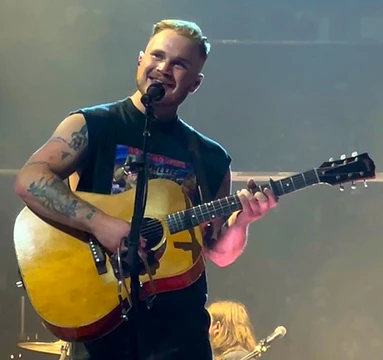
Redemption
Broken doesn't mean finished; it means the song isn't over yet.

Redemption is one of the central thematic pillars of Zach Bryan's songwriting and the emotional through-line that fans most frequently cite when describing what his music means to them. It is not a single song or a single album but a recurring arc: the idea that a person can be broken, lost, or at the very bottom of their life and still walk back toward something that looks like grace. In Bryan's world, redemption is never clean or triumphant; it is muddy, half-remembered, and earned the slow way—through a long drive, a cold drink, a conversation that finally gets said out loud. As a signature sound element, redemption shapes how Bryan sings. His vocal delivery—rough, slightly cracking, deliberately unpolished—sounds like a man who has been through something and is still carrying the weight of it. The music around those words tends to be sparse: a single guitar, a hummed harmony, the creak of a porch. The production choices reinforce the theme: nothing is over-produced, nothing is fixed, and that imperfection is the point. The listener is invited to sit in the mess with him rather than be rescued from it.
- Theme
- Redemption / Second Chances / Grace After Failure
- Origin
- Burley, Oklahoma
- Military Service
- U.S. Navy (approximately five years)
- Debut Studio Album
- I Remember Everything (2021)
- Second Studio Album
- American Heartbreak (2022)
- Primary Genre
- Country / Folk / Americana
- Signature Vocal Quality
- Raw, gravelly, emotionally exposed delivery
Lore & Background
In the mythology fans have built around Bryan's catalog, redemption is not a destination but a recurring act. A character in his songs has left the Navy, dropped out of college, lost a relationship, or simply lost the plot of their own life. They are sitting in a truck in a small Oklahoma town, or standing in a kitchen at two in the morning, and the only thing that keeps them going is the stubborn, irrational belief that tomorrow might be a little less terrible than today. That belief is the redemption. It is not a lightning bolt; it is a slow dawning, like the first gray light before sunrise on a long winter morning. The lore also ties redemption to place. Burley, Oklahoma is not just a hometown; in the fan-constructed narrative it functions as a kind of spiritual zero point. The dirt roads, the open sky, the old houses with peeling paint—these are the textures of a life that has been lived hard and is still being lived. Bryan's songs treat that landscape as a witness. The land doesn't judge. It just keeps going, season after season, and the character in the song can keep going too, the same way. What makes the redemption theme resonate so deeply with fans is its refusal to be tidy. There is no villain to defeat, no grand speech that fixes everything. The redemption in Bryan's world is quiet, personal, and often incomplete. A character might forgive themselves on a Tuesday and then feel the whole thing again on a Thursday. That cyclical, imperfect, still-trying quality is what fans describe as the emotional core of listening to him. It is the sound of a person who is not healed but is healing, and who has decided that the attempt itself is enough.
In Their Own Story
The truck idles in the dirt drive outside the house that used to be his. Engine ticking as it cools. He doesn't go inside. Not yet. He sits with his hands flat on the steering wheel, feeling the vibration die out, and watches the last of the orange light bleed out of the sky over the flat Oklahoma field. A crow lands on the fence post, looks at him like it has all the time in the world, and hops down. He almost laughs. Almost. He reaches for the cold can of beer in the door pocket, takes a long pull, and for the first time in a while the knot behind his sternum loosens just enough to breathe through. He starts the engine again. Not to leave. Just to feel the hum. Just to prove to himself that the day is still moving and so is he. That is enough. Tonight, that is enough.
Reader's Guide
Redemption, as a creative power in Bryan's work, is the ability to take the ugliest, most self-punishing moment of a life and hold it up to the light without flinching, then let the light do the rest. It shows up as a narrative arc across multiple songs: a character hits rock bottom (a lost relationship, a period of instability, a failure they cannot stop replaying in their head), and then—slowly, messily—begins to rebuild. The rebuilding is never a montage. It is a single phone call. A walk to the mailbox. A song hummed off-key in a kitchen. Sonically, redemption manifests in restraint. Stripped-down guitar arrangements, a vocal that cracks and recovers, lyrics that circle the same painful memory three or four times before finally letting it go. The production almost feels unfinished, and that is the craft: the imperfection signals that the person singing is still in the process, not the after. Why it is central to his identity: Bryan built his public persona on the idea that the guy who was homeless, who left the Navy, who dropped out, who lost everything, is the same guy who can stand in front of a crowd and sing. The redemption is not separate from the art; it IS the art. The audience is not watching a performer; they are witnessing the ongoing act of a person choosing to keep going. Fans connect to this because it mirrors their own incomplete healings. They do not need the song to fix them. They need the song to say, 'I am still in it too, and I am not ashamed.' That shared, unpolished vulnerability is the bond.
Did You Know?
- Bryan has spoken publicly about a period of homelessness and instability after leaving the U.S. Navy, a stretch he has referenced in interviews as the raw material for much of his early songwriting.
- His debut album 'I Remember Everything' was recorded and released with a deliberately lo-fi, home-grown aesthetic that fans describe as sounding like it was made in a bedroom in Oklahoma, which became part of its emotion
- Bryan is known for performing in stripped-down, often outdoor or small-venue settings where the production is minimal—sometimes just voice and guitar—reinforcing the idea that the song and the person are the same thing.
- Many fans describe his live shows as communal, with audiences singing along to long, narrative songs that can stretch past ten minutes, creating a shared, almost ritualistic experience of sitting with difficult emotions
More in Themes & Signature Sounds
Elsewhere in the Zach Bryan universe
Spotted an error? Know more?
This is a living reference — every entry is fact-audited, and reader corrections feed straight into our audit queue. Suggest an edit · See this site's audit record