Austin
Where the porch-swing truth of Oklahoma meets the neon pulse of a thousand guitar strings.

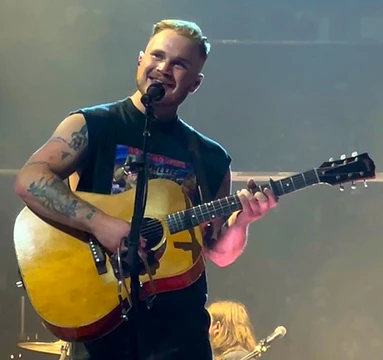
In the sprawling lore of Zach Bryan's world, Austin, Texas stands as the city that represents the broader live-music universe beyond the Oklahoma dust and small-town roots he carries in every song. It is the place where the raw, stripped-down honesty of a guy from Burleigh meets the neon-lit, guitar-slinging culture of the 'Live Music Capital of the World.' For fans, Austin is less a single stop on a tour map and more a symbol: the moment the quiet, porch-swing storytelling of the Midwest collides with a scene that has been passing songs around for generations. As a lore entry, Austin captures the tension at the heart of Zach Bryan's identity — the small-town authenticity versus the big-stage spectacle, the dirt-road honesty versus the polished industry machinery. It is the city he walks through, plays in, and eventually leaves behind, carrying a little of its electric energy back toward the plains.
- Type
- City / Touring destination in the live-music circuit
- Region
- Texas, United States
- Role in Lore
- Symbol of the broader music world beyond Oklahoma roots
- Cultural Identity
- Known as the 'Live Music Capital of the World'
- Connection to Zach Bryan
- Part of his touring and live-performance world
Lore & Background
In the geography of Zach Bryan's songs, there is a clear axis: the Oklahoma heartland on one end, and the sprawling, guitar-drenched cities of the South and Southwest on the other. Austin sits firmly on that southern axis. It is the city where the music scene has a history stretching back decades, where a kid can walk into a dive bar at 11 p.m. and hear a band that has been playing the same corner for twenty years. For a songwriter who built his identity on the idea of unfiltered, unproduced truth, that tradition of raw, in-room music-making resonates deeply. The lore of Austin in the Zach Bryan world is not about a single song or a single night. It is about the feeling of stepping off a tour bus into a city that treats live music as infrastructure rather than entertainment. It is the contrast between a venue where five hundred people are packed shoulder-to-shoulder singing along and the memory of a farmhouse in Burleigh where the only audience was the wind through the screen door. Fans read that contrast into every performance: the slight rasp, the way he lets a silence stretch, the way he sometimes looks like he is still hearing the song for the first time even when the room is roaring. Austin also represents the 'next step' in the narrative arc that fans trace through his catalog — the journey from bedroom videos shot on a phone to stages where the production is bigger, the crowd is louder, and the stakes feel different. Yet the lore insists that no matter how big the room gets, the song still has to sound like it was written on a porch. Austin is where that test is passed, night after night.
In Their Own Story
The bass thump from the venue vibrates through the soles of his boots as he steps off the curb. Austin at eleven at night smells like rain on hot asphalt and the faint sweetness of a food-truck's fryer. He pulls his jacket tighter, not from cold but from the sudden, almost aggressive warmth of the city after a long stretch of highway and small-town stages. A stranger bumps his elbow and says, 'You coming in or just standing there?' He almost laughs. Back home, standing outside was the whole show. Here, the whole show is what's behind the door. He pushes through the glass, and the noise hits him like a wave — a hundred voices, a wall of amber light, the clink of bottles. Somewhere in there, a guitar is being tuned. He finds a stool at the bar, orders something he won't finish, and just listens for a minute. The city hums around him, electric and restless, and for a moment the Oklahoma quiet in his chest feels very far away. Then the band starts, and it isn't far at all. It never really is.
Reader's Guide
Zach Bryan's relationship to Austin, Texas is less about a single defining moment and more about the city's place in the larger ecosystem of American live music that shaped his career trajectory. Growing up in Burleigh, Oklahoma, his musical world was small: a guitar, a phone camera, a handful of friends who thought his songs were interesting. Austin represents the opposite pole — a city where live performance is woven into the civic identity, where venues of every size and genre coexist, and where an artist can play to twenty people on a Tuesday and two thousand on a Saturday without the shift feeling like a betrayal of craft. His touring life brought him through Texas repeatedly, and Austin, with its dense cluster of stages, became a natural waypoint. The city's culture of supporting local and touring musicians alike created an environment where a songwriter still finding his footing could test material in front of real rooms, get real feedback, and feel the difference between a song that works on a phone speaker and one that holds up under a full-band arrangement. For fans tracing the 'Oklahoma identity' thread through his work, Austin serves as the counterweight. It is the reminder that the songs were never meant to stay in one zip code. The dust, the porches, the small-town grief — those are the roots. But the roots only mean something because the branches reach toward cities like Austin, where the music gets to be heard by people who have never seen a wheat field at sunset but feel the same ache when the chorus hits.
Did You Know?
- Austin, Texas is widely recognized as the 'Live Music Capital of the World,' a title that reflects its dense concentration of active music venues and a culture where live performance is a daily civic habit rather than a
- Zach Bryan's early breakout came through raw, home-recorded videos that captured an unpolished, intimate sound — a quality that resonates strongly with Austin's long tradition of small-room, guitar-driven music over big
- The contrast between his Oklahoma small-town origins and the big-city touring circuit is a recurring emotional thread in how fans interpret his live performances, with cities like Austin embodying that 'bigger world' he
- Austin's music scene spans genres from folk and country to rock and indie, creating a natural cross-pollination environment that mirrors the blend of folk storytelling and modern country sound in Zach Bryan's catalog.
More in Lore & History
Elsewhere in the Zach Bryan universe
Spotted an error? Know more?
This is a living reference — every entry is fact-audited, and reader corrections feed straight into our audit queue. Suggest an edit · See this site's audit record