Raw Unpolished Vocal Takes
The crack in the voice is where the truth lives, and he refuses to fix it.

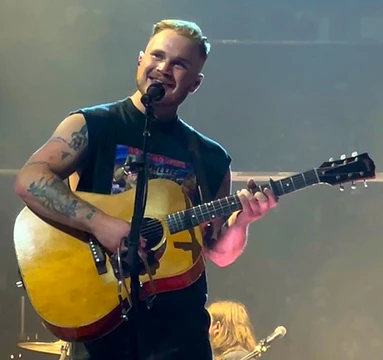
Raw Unpolished Vocal Takes is the sonic fingerprint that defines Zach Bryan's artistry: a deliberate, almost defiant choice to let the human voice remain imperfect, cracking, breathy, and emotionally exposed rather than smoothed into studio perfection. In a pop and country landscape where pitch-correction and multi-track vocal comping are standard, Bryan's approach feels like a door left open in a recording booth—the listener can hear the room, the hesitation, the slight rasp before a note lands. This isn't an accident of budget or inexperience. It is a creative philosophy. Whether he's whispering a confession over a single acoustic guitar or letting his voice break open on a sustained high note, the rawness is the point. It transforms a song from a product into a moment, and that moment is what millions of fans say they feel in their chest when the track drops.
- Genre
- Folk / Country / Americana
- Hometown
- Burley, Oklahoma
- Primary Instrument
- Acoustic Guitar
- Vocal Philosophy
- Minimal-take, emotionally exposed delivery
- Production Aesthetic
- Stripped-back, room-mic'd, lo-fi-leaning
- Early Breakthrough Platform
- YouTube (pre-label career)
Lore & Background
Zach Bryan's path to a national audience ran through a bedroom in rural Oklahoma, where the nearest professional studio was a long drive away and the equipment was whatever he could afford. Those early recordings—posted to YouTube with a phone mic and a single guitar—sounded like someone talking to you across a campfire. There was no safety net of retakes, no pitch grid to hide behind. The songs carried the weight of a person who had no filter between feeling and sound. When those videos began to accumulate millions of views, the industry response was predictable: get him into a proper studio, clean it up, make it radio-ready. Bryan, to the surprise of many executives, kept the rough edges. As his career expanded into larger venues and more elaborate productions, the rawness didn't disappear; it evolved. The guitars got fuller, the arrangements layered in strings and percussion, but the vocal track still often sounds like it was captured in one or two passes in a small room. You can hear the inhale before a phrase, the slight stumble on a consonant, the way his register shifts from a low murmur to a strained, almost breaking belt without any studio smoothing. Producers who work with him have described the sessions as more like capturing a performance than building a track, and Bryan has spoken in interviews about the importance of getting the emotion in the first pass rather than assembling a technically perfect but emotionally dead vocal line. This philosophy has become a touchstone for a generation of listeners who grew up in an era of hyper-produced, auto-tuned country and pop. For them, Bryan's voice—imperfect, sometimes hoarse, occasionally cracking on a high note—sounds like the first time they've heard a singer who is actually feeling the words in real time. It turns listening into witnessing.
In Their Own Story
The studio is quiet in the way that only small rooms can be quiet—thick, close, alive with the hum of a single condenser mic. Zach sits on the edge of a wooden stool, guitar across his lap, fingers already finding the open G chord. The engineer asks if he wants to run it back. He shakes his head. "I'm good. Let's just… go."
He doesn't sing the first line. He breathes. You can hear it on the track later, that small intake, the creak of the stool. Then the words come out low, almost muttered, like he's telling the story to himself before he realizes someone's listening. By the second verse his voice has climbed, thinned, started to fray at the edges. He doesn't stop. He doesn't ask for a count-in. The last note hangs in the room air, slightly flat, slightly broken, and he lets it die without trying to rescue it. The engineer looks at the waveform on the screen. One take. No comp. No pitch. Just a man and a guitar and the particular silence of a small room in Oklahoma at night. He hits save without asking permission.
Reader's Guide
Think of Raw Unpolished Vocal Takes as Bryan's signature power: the ability to make a listener feel like they're the only person in the room. It shows up in the way a whispered opening line sits close to the mic, almost intimate, before a verse swells into a full-throated delivery that carries the faintest rasp. It shows up in the breathing. You hear the inhale, the slight vocal fry before a consonant, the way a sustained note wavers not because he can't hit it but because he's choosing to let it waver. Across his catalog, whether the arrangement is a lone guitar or a full band with strings, the vocal track retains that small-room, single-mic intimacy. It's the constant. Why is it central? Because it collapses the distance between performer and listener. A polished vocal says here is a performance for you. A raw vocal says here is what I'm feeling right now, and you're allowed to be in the room. For fans who grew up with heavily produced country and pop, that distinction is almost spiritual. They don't just hear a song; they feel witnessed. The crack in the voice becomes a shared vulnerability, and that's the bond that turns a YouTube upload into a ten-thousand-seat arena singalong. The craft behind it is real discipline. Choosing not to fix a take, to trust the first emotional pass, to let a slightly flat note carry more truth than a perfect one—those are decisions that take more artistic courage than nailing every pitch. Bryan wields that restraint the way a novelist wields silence: as the most powerful tool in the kit.
Did You Know?
- Bryan's early breakthrough came through self-recorded videos posted to YouTube, where the lo-fi production and single-mic vocal delivery were part of the appeal rather than a limitation to be fixed.
- He is known for writing and performing songs with extended, narrative structures—sometimes running well over five minutes—where the vocal delivery shifts between spoken murmur, mid-range storytelling, and full belted cli
- His vocal approach has been described by listeners and critics as conversational, as if the song is being told rather than performed, which sets his work apart from the more melodic, polished vocal style of mainstream co
- Bryan has spoken publicly about the emotional difficulty of performing his own songs live, where the rawness of the studio recording meets the pressure of an audience, making each show a genuine act of vulnerability rath
More in Themes & Signature Sounds
Elsewhere in the Zach Bryan universe
Spotted an error? Know more?
This is a living reference — every entry is fact-audited, and reader corrections feed straight into our audit queue. Suggest an edit · See this site's audit record