US Navy Service

via Wikipedia: Zach Bryan · see source
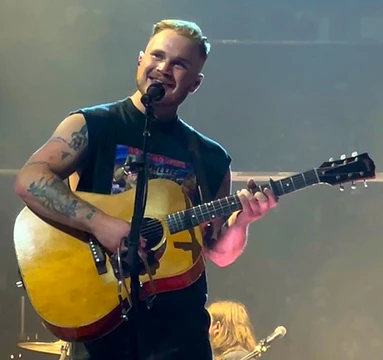
Zach Bryan's US Navy service is the quiet, formative chapter that precedes his rise as one of country music's most emotionally raw storytellers. He has spoken in numerous interviews about how those years instilled in him a deep sense of duty, a comfort with long stretches of solitude, and a hard-won awareness of how quickly time and distance can reshape a life. For fans, the Navy era is not just a résumé line—it is the emotional bedrock beneath songs about leaving home, the ache of missing people, the weight of obligation, and the strange freedom that comes after years of structure. It explains the grounded, no-nonsense delivery in his voice and the way his lyrics often circle around themes of loyalty, loss, and the pull of the sea.
- Enlisted after
- Age 17, before high school graduation (earned GED in the Navy)
- Hometown of origin
- Oologah, Oklahoma
Verified Timeline
Lore & Background
Bryan has described his Navy years in interviews as a period of intense structure and, paradoxically, profound loneliness. The rhythm of shipboard life—early watches, long stretches of monotony punctuated by bursts of activity—seems to echo in the cadence of his early songwriting. He has referenced the experience of being hundreds or thousands of miles from the small Oklahoma town he grew up in, and the particular grief of watching seasons change on a coastline you can no longer walk. That distance, he has suggested, is where a lot of his earliest songs were born: not in a studio, but in the quiet hours between duties, with a notebook or a phone voice memo catching a thought before it slipped away. What fans often note is how the Navy shaped not just the content of Bryan's music but its emotional register. There is a restraint in his delivery, a refusal to over-ornament a feeling, that listeners connect to the discipline and self-containment he describes from his service years. He has talked about learning to sit with discomfort, to do the next task without dramatizing it, and to honor the people around you without always saying so. Those values—duty over ego, presence over performance—thread through his live shows, his public statements, and the way he speaks about friendship, family, and the places that made him. The service also gave him a concrete, shared vocabulary with a large portion of his fanbase. Veterans and active-duty service members have repeatedly told him that his songs feel like they were written for the specific, unglamorous interior life of someone who has been away from home for a long time and is trying to find their way back. That resonance is one of the most cited reasons his music feels immediate and unperformed, even when the subject matter is universal.
In Their Own Story
He could smell the diesel, the salt crust on the railing, the faint sweetness of the coffee he'd had two hours ago and was already forgetting. Somewhere below, the engine hummed its one endless note. He thought about Burleigh—about the particular way the light hit the pines on the road to his grandmother's place in late August—and felt the familiar, quiet ache of a place that existed now mostly in memory. He didn't pull out his phone. He didn't need to. He just stood there, hands in his pockets, letting the cold air do what it did, and somewhere in the back of his mind a line of a song was already forming, patient as the tide, waiting for him to be ready to write it down. He wasn't ready yet. But it would be there when he was.
Reader's Guide
Chapter One: The Decision. He has spoken about it in a matter-of-fact way, the way people talk about a job they took because it was the next logical step, because the world outside a small coastal town felt narrow, and because the Navy offered structure, purpose, and a way out without a plan. It mattered because it separated him, for the first time, from the only geography he had ever known. Chapter Two: The Years. Five years of service. He has described the rhythm—watches, routines, the particular loneliness of being far from home while the people closest to you go on living. He has referenced the discipline of doing the next task, of not dramatizing the small cruelties of distance and time. These years gave him a vocabulary for obligation and restraint that would later color his songwriting. He learned to sit with a feeling without immediately performing it, a habit that fans recognize in his live shows and in the way he speaks about friendship and family. Chapter Three: The Aftermath. Discharge, and then a brief, uncertain period of figuring out what came next. He has talked about the disorientation of losing the structure that had held his days together, of suddenly having to decide what he wanted to do with the hours that were now his own. That uncertainty is where the songwriting really took hold—not as a career plan, but as a way to process the transition. The Navy didn't give him a song. It gave him the silence in which the songs could finally be heard.
Did You Know?
- Bryan has mentioned in interviews that the long stretches of time away from Oklahoma during his Navy service were a major source of the homesick, reflective tone in his early songwriting.
- He has described the Navy experience as teaching him to 'do the next task' without overthinking, a mindset fans say is visible in his no-frills live performances and public demeanor.
- His small hometown of Oologah, Oklahoma, is a recurring emotional anchor in his music, and the distance between that place and his Navy assignments is a theme he has referenced in conversation with fans.
- Bryan enlisted at age 17 before graduating high school, earning his GED while serving in the Navy.
Navy Roots and the Making of a Songwriter
Zach Bryan's bond with the U.S. Navy is woven into both his personal story and his creative origins. Born in Yokosuka, Japan, in April 1996, he was the son of parents stationed there as part of a Navy deployment. After the family relocated to Oologah, Oklahoma during his eighth grade, Bryan followed a family tradition by enlisting at seventeen. Over eight years of active duty he earned the rating of Aviation Ordnanceman Second Class. It was during those service years that he began composing songs in his spare time, many of which would later appear on his early albums. The viral track "Heading South" was, in fact, recorded outside his Navy barracks. He remained in uniform until October 2021, when he received an honorable discharge at age twenty-five so he could fully commit to his music career.
From iPhone Recordings to a Major-Label Debut
Bryan's path to the mainstream began in 2017 when friends simply pointed an iPhone at him performing. He uploaded sixteen tracks to YouTube before "Heading South" caught fire and pulled him into the public eye. His debut album, DeAnn, arrived in August 2019, written in just two months and recorded with friends in a Jacksonville, Florida Airbnb. A year later came Elisabeth, captured in a repurposed barn behind his home in Washington. After making his Grand Ole Opry debut in April 2021 and signing with Warner Records, Bryan released American Heartbreak in May 2022. The triple album, containing thirty-four tracks, debuted at number five on the Billboard 200 with over seventy thousand first-week units, the largest opening for a country record that year. Its lead single, "Something in the Orange," climbed to the top ten of the Hot 100 and became his most recognizable song.
Chart Dominance and the Self-Titled Breakthrough
The self-titled fourth album, released in August 2023, marked a seismic shift in Bryan's career. It launched straight to number one on the Billboard 200, and its lead single, "I Remember Everything" featuring Kacey Musgraves, debuted at the top of the Hot 100 while simultaneously topping the Hot Country Songs and Hot Rock & Alternative Songs charts. All sixteen tracks on the album charted on the Hot 100, with five landing in the top twenty. The collaboration earned Bryan a Grammy Award for Best Country Duo/Group Performance. Earlier that year he had already collected the Academy of Country Music Award for New Male Artist of the Year. His September 2023 EP, Boys of Faith, featured Noah Kahan and Bon Iver, with all five of its tracks charting. By year's end, Billboard named him the top new artist of 2023.
Commercial Scale and Award Recognition
The numbers behind Bryan's rise tell a story of extraordinary commercial momentum. According to the RIAA, he has sold more than thirty million albums and singles combined. His album trajectory reflects a rapid ascent: American Heartbreak peaked at five, the self-titled record claimed the top spot, The Great American Bar Scene (2024) reached number two, and With Heaven on Top (2026) debuted at one. His award shelf includes a Grammy, an Academy of Country Music honor, and four Billboard Music Awards. Beyond the charts, his live presence has expanded from a first show in Medford, Oregon in 2019 to headline slots at the Ryman Auditorium and a live album recorded at Red Rocks Amphitheatre. The breadth of his catalog, spanning self-produced indie releases, a triple album, multiple EPs, and collaborative projects, underscores a career that has grown from iPhone recordings in a barracks to a defining voice in contemporary country music.
Gallery





Frequently Asked Questions
How long did Zach Bryan serve in the Navy and what was his role?
Bryan enlisted as a Sailor in the United States Navy and spent roughly five years in uniform. He joined directly after graduating high school, so his early twenties were defined by life at sea.
Where was Zach Bryan from before he joined the Navy?
He grew up in Burleigh, South Carolina, a small coastal community, and left that town to enlist right after finishing high school. The salt-and-pine atmosphere of his hometown still echoes through many of his early songs.
How did his Navy years influence his songwriting?
Bryan has explained in interviews that serving taught him to sit comfortably with long stretches of quiet and to take obligations seriously at a young age. He also credits the experience with sharpening his awareness of how fast distance and time can quietly restructure the people around you, a theme that runs through much of his catalog.
What does Zach Bryan say about the emotional weight of his Navy service?
He describes those five years as a period of salt, steel, and silence that taught him to carry a heavy load without needing an audience for it. In his own telling, the Navy era is less a résumé line and more the quiet foundation that made his later storytelling feel earned.
What did Zach Bryan do right after leaving the Navy?
He went straight into full-time songwriting and live performance, essentially trading the rigid structure of military life for the unpredictability of the touring circuit. That single pivot from enlisted Sailor to full-time musician is the hinge on which his entire career turned.
More in Story & Timeline
Related in Zach Bryan
Links follow this subject's own source article.
Elsewhere in the Zach Bryan universe
Spotted an error? Know more?
This is a living reference — every entry is fact-audited, and reader corrections feed straight into our audit queue. Suggest an edit · See this site's audit record