I'll Never Love Again
A voice cracked open in a quiet room, saying the thing no one else dares to say out loud.

"I'll Never Love Again" is a 2023 song by Zach Bryan that sits at the emotional core of his *The Great American Country* album. It is a raw, aching meditation on the moment after a relationship shatters—not the drama of the breakup itself, but the long, hollow silence that follows, when the world keeps spinning and your chest has gone quiet. The track became one of the most discussed songs of Bryan's career, resonating with listeners who recognized in its blunt, unadorned delivery the feeling of being emotionally locked out of your own life.
- Artist
- Zach Bryan
- Genre
- Country / Folk / Americana
- Album
- The Great American Country
- Release Year
- 2023
- Primary Theme
- Post-relationship grief and emotional numbness
- Production Style
- Stripped-down, voice-and-guitar-forward
- Cultural Context
- Widely discussed in connection with Bryan's 2023 divorce
Lore & Background
The song occupies a specific emotional register that Bryan has cultivated since his early YouTube uploads: the feeling of standing in a kitchen at 3 a.m., the house too quiet, the coffee cold, and the realization that the person who used to fill the silence is simply gone. What distinguishes "I'll Never Love Again" from other breakup songs in the country-folk tradition is its refusal to dramatize. There is no storm, no burning bridge, no last phone call. There is only the flat, terrifying acceptance that the capacity to love has gone dormant, and no one can turn it back on for you.
In Their Own Story
The porch light is still on. It's been on for three weeks now, and no one has gone inside to turn it off. The screen door slaps shut in a breeze that doesn't feel like anything anymore. On the table, two mugs. One is washed. The other is still there, a ring of coffee dried into the glaze like a small brown scar. He sits on the step, guitar across his knees, and plays the same four chords for the ninth time. Not because he's working on the song. Because the four chords are the only shape his hands know how to make when the rest of the body has stopped listening. The crickets don't care. The crickets have never cared. He hums a melody that isn't a melody yet, a shape in the air that might become a sentence if he lets it, and the porch light flickers once, twice, and holds. The house behind him is full of rooms no one is in. The song is the only room left open.
Reader's Guide
Think of this song as the chapter where the narrator stops performing grief and just… sits in it. Before "I'll Never Love Again," Bryan's songs tended to be journeys: a drive across Oklahoma, a memory of a specific place, a story with a beginning and an ending. This track is a single, sustained exhale. There is no road. There is no destination. There is only the present tense of being unable to feel, and the terrifying honesty of admitting it out loud to a room full of strangers. What made it land so hard was timing. Bryan had just come through the most public, painful chapter of his personal life, and the song carries the weight of someone who has been asked to be a performer while his own life is being dismantled in real time. The stripped-back production—just voice, guitar, a little room tone—feels like he took the armor off. No string section. No layered harmonies. Just a man in a room, saying the thing he's been avoiding saying for months. For his sound, it marked a subtle but important shift. The later tracks on *The Great American Country* and beyond carry this same nakedness, as if the song broke a seal. He stopped needing the landscape to do the emotional work. The feeling is in the voice, in the pauses, in the way a word is almost swallowed before it's finished. It made the rest of his catalog feel more intimate by contrast, like you'd been watching a movie and suddenly the camera got closer.
Did You Know?
- The song's deliberately sparse production—essentially voice and a single acoustic guitar—mirrors the approach Bryan used on his earliest YouTube uploads, creating a full-circle moment between his 2019 breakout and his 20
- Bryan has described in interviews how he often writes songs in a single sitting and resists the urge to re-record or over-arrange them, a philosophy that is most visible in the raw, unpolished vocal take on this track.
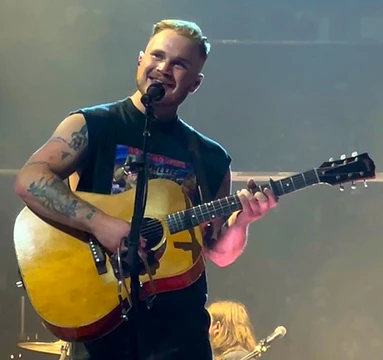
- The song became a staple at his live shows, where he frequently performs it as a solo, acoustic set piece with the audience in near-silence, sometimes letting the room tone and his breathing carry the final bars.
- Its title and central image—love as a capacity that can simply switch off—resonated with a generation of listeners who described the feeling as 'emotional anesthesia,' a phrase that appeared in thousands of fan comments
More in Story & Timeline
Elsewhere in the Zach Bryan universe
Spotted an error? Know more?
This is a living reference — every entry is fact-audited, and reader corrections feed straight into our audit queue. Suggest an edit · See this site's audit record